

Efficiency 101
Highlights
- Heats Pumps 101
- Types of Heat Pumps
- Water Heating
- Electrical Considerations
- Weatherization
- Heat Pumps 101
- Type of Heat Pumps
- Water Heating
- Electrical Considerations
- Weatherization
Heat Pumps 101
Learn about what heat pumps are, how they work, how savings can be achieved, and why heating with heat pumps is better for you, your wallet, and your community.
What is a heat pump?
A heat pump is a clean, efficient heating and cooling system that uses electricity to move heat, not create it. Instead of burning fuel, it pulls warmth from the outdoor air and delivers it into your home.
Do heat pumps work in cold Alaska winters?
Yes. Modern cold climate heat pumps are engineered to perform efficiently even in sub-zero temperatures, a major improvement over older heat pump models. Many systems installed in Alaska today continue operating effectively down to -13°F or lower. In the coldest conditions, many homeowners pair a heat pump with a backup heat source for extra reliability, but for most of the heating season, the heat pump handles the load on its own.
How can heat pumps help to lower my heating bills?
Heat pumps are highly efficient because they move heat instead of generating it. For every unit of electricity used, they deliver 2.5 to 3.5 units of heat, an efficiency of 250% to 350%, sometimes shown on equipment labels as a COP (coefficient of performance) of 2.5 to 3.5. Compare that to an oil boiler or furnace, which typically returns only about 0.8 units of heat for every unit of fuel burned. This makes heat pumps far more efficient than electric resistance heating, like baseboards, electric furnaces, or space heaters, and switching from resistance heat often pays for itself quickly. Efficiency does decrease somewhat as outdoor temperatures drop, which is why choosing a cold climate rated system matters in Alaska.
Comparing heat pumps to fuel-based systems like oil boilers or pellet stoves takes a bit more work, since each fuel is priced differently (per gallon, per kWh, per cord). To compare fairly, we look at the cost per million BTUs of delivered heat. By that measure, air source and ground source heat pumps consistently come out as the lowest cost option, as shown in the graph below.
How do heat pumps reduce greenhouse gas emissions?
Heat pumps run on electricity, which in Alaska is purchased from the local utility. In communities powered mainly by hydropower, wind, or other renewables, like much of Southeast Alaska and Kodiak, heat pumps produce essentially zero carbon emissions, a direct improvement over heating oil or biomass. By comparison, heating oil emits about 160 lbs of CO2 per million BTUs of delivered heat, or roughly 22 lbs per gallon burned. It is important to work with a contractor licensed to handle refrigerants, since the refrigerants inside heat pumps are potent greenhouse gases, up to 700 times more powerful than CO2. A licensed installer keeps your system leak-free and ensures old refrigerant is disposed of or reused correctly, so the climate benefits of your heat pump are fully protected. Refrigerant technology also keeps improving, with lower impact options becoming the industry standard.
How could heat pumps improve my health?
Because heat pumps don’t burn fuel, they don’t produce particulate matter, carbon monoxide, or other pollutants that can harm indoor air quality. There’s also no flue pipe venting combustion waste outside, so neighborhood air quality benefits too. Most heat pump systems include built in air filtration, and research consistently links cleaner air to better long term health.
How do heat pumps help my community?
Heat pumps benefit the whole community. They cut carbon emissions, improve local air quality, create work for local contractors, and rely on local energy sources instead of imported fuel, reducing dependence on fuel barges and volatile heating oil prices. Every household that switches strengthens that momentum for the whole community.
How does a heat pump work?
A heat pump works like a refrigerator in reverse. A compressor, refrigerant, and expansion valve move heat from the outdoor air into the air inside your house. Cold refrigerant enters the compressor, where it’s pressurized, which raises its temperature and turns it into a hot, high pressure vapor. That heat is carried indoors and distributed through a fan in the air handler. The refrigerant then passes through an expansion valve, cools down, and moves back outside to absorb more heat from the outdoor air. The cycle repeats, continually pulling warmth inside.
Types of Heat Pumps
Heat pumps come in many forms, but air-source heat pumps are by far the most common choice for homes and businesses in Southeast Alaska.
Air-Source Heat Pumps
Air-source heat pumps pull heat from the outside air (even in cold climates) and move it indoors to heat your space, then are able to reverse the process in summer to provide cooling. Because they simply move heat rather than generate it, they’re highly efficient, using far less energy than electric resistance or fossil fuel heating. There are three main types:
Ductless Mini-Split
The most affordable and efficient way to heat your home.The most common type of air-source heat pump installed in our region. Ductless Mini-splits are typically the most affordable to install and the most efficient to operate. They don’t require ductwork, making them a great fit for retrofits, and can be installed as single-zone (one indoor unit) or multi-zone (several indoor units serving different rooms) systems.

Ducted
Whole-home heating and cooling through your existing ductwork.These systems connect to existing or new ductwork to distribute heated or cooled air throughout the home, similar to a traditional furnace. They’re a good option for homes that already have ducts in place, or for those wanting whole-home coverage from a single system.
Air-to-Water
Heat pump efficiency for radiant floors and hydronic systems.Instead of heating air directly, these systems use outdoor air to heat water, which is then circulated through radiators, in-floor radiant heating. They can be a good fit for homes with existing hydronic (water-based) heating systems. Note that air-to-water heat pumps are generally not compatible with high-temperature radiators, like hydronic baseboard, they perform best when paired with low-temperature heating systems, such as in-floor radiant heat.
Other Types of Heat Pumps
While air-source is the right fit for most homes, a few other technologies exist:
- Geothermal (ground-source) heat pumps draw heat from the stable temperature underground. They can be highly efficient but come with much higher installation costs due to the excavation involved.
- Tidal/water-source heat pumps draw heat from seawater — a technology of particular interest in coastal Alaska communities, though not yet widely deployed.
For most homeowners, a ductless mini-split system offers the best balance of cost, performance, and ease of installation.
Water Heating
Water heating is one of the biggest energy uses in an Alaska home, often ranking second only to space heating, and typically accounts for 15 to 20% or more of a home’s total energy use. Because we use hot water every day for showers, laundry, and dishes, and because it runs year-round rather than seasonally, even small efficiency gains add up to real savings. Upgrading to a more efficient water heater is a great way to lower energy costs, reduce strain on your electrical or fuel system, and cut carbon emissions.
Common Types of Water Heaters
- Indirect Tanks (Oil or Propane Boiler-Fed) – Common in many Alaska homes, these storage tanks use the home’s oil or propane space heating boiler as the heat source for hot water rather than a standalone burner. Efficiency depends on the boiler’s condition and how well the system is set up.
- Tankless (On-Demand) – Heats water only as it’s used, avoiding standby losses from a storage tank. Can be electric, oil, or propane-fired.
- Electric Tank – Heats and stores water in a tank using electric resistance elements. Simple and reliable, but less efficient than a HPWH as it uses one unit of electricity for each unit of heat produced.
- Heat Pump Water Heaters (HPWHs) – Instead of generating heat directly, HPWHs move heat from the surrounding air into the water. This makes them far more efficient than standard electric storage models. Learn more from Energy Star’s Heat Pump Water Heater page.
Why Electric and Heat Pump Water Heaters Make Sense
Standard electric water heaters are simple and low-maintenance, with no combustion, venting, or fuel deliveries to worry about. Heat pump water heaters take this a step further: they typically use 2-3 times less electricity than a standard electric tank to produce the same amount of hot water. Over time, that efficiency translates into significant savings on utility bills, even in Alaska’s climate. HPWHs perform best when installed in a semi-heated space like a basement or garage. HPWHs are not well suited for installation in small closets or other low volume rooms. Note that communities with low electric rates are best suited for electrifying water heating.
Decoupling Water Heating When Adding a Heat Pump
If you’re installing a heat pump for space heating but keeping your oil or propane boiler as a backup or supplemental heat source, it’s worth also switching your hot water from an indirect tank to a standalone water heater (such as an HPWH). Once the heat pump takes over most of the heating load, the boiler will run far less often. If it’s still tasked with heating water, it ends up firing on and off just to keep the tank hot, resulting in short, frequent cycles that are inefficient and put extra wear on the equipment. Decoupling water heating from the boiler lets the boiler sit idle when it isn’t needed and keeps hot water production efficient year-round.
Home Energy Assessment
Getting a Home Energy Assessment from Alaska Heat Smart is a great way to make a plan, compare operating costs for different water heating options, and decide what’s the best fit for your home and needs.
Electrical Considerations
Adding a heat pump, electric water heater, EV charger, or other new electric equipment often asks more of your home’s electrical system than it was originally designed for. Two factors determine whether your home is ready, or what upgrades may be needed first: your overall panel and service capacity, and whether your panel has room for new circuits.
1. Panel and Service Capacity
Your electrical panel distributes the power from the electric utility service to every circuit in your home, and it’s rated for a maximum load. Older, smaller homes often have panels rated around 100 amps, sized for the appliances of their time, while 200 amps is the modern standard for home electric capacity. Adding new electric loads, especially several large ones at once (like a heat pump, HPWH, and EV charger), may require upgrading to a higher amperage. Since this involves both your panel and the utility’s line into your home, this kind of upgrade is typically coordinated with your utility.
2. Breaker Space
Even with sufficient amperage, your panel needs open slots for new circuits. A full panel may need a subpanel, a reconfiguration of existing breakers, or space-saving “tandem” breakers where allowed. Panel age and brand matter too: some older models are harder to find parts for or are no longer considered safe to expand.
Planning Ahead
Heat pumps, electric water heaters, and other electric equipment add new demand to your electrical system. Understanding your panel and service capacity and available breaker space up front helps avoid surprises during installation, keeps your system operating safely, and helps you plan for future upgrades as you electrify more of your home.
Example Panels:
Full Panel

Full Panel – If you look at the breakers installed in this panel, there are already a number of tandem breakers installed along with double pole breakers. Neither of these style breakers make it possible to consolidate electrical circuits to make room for the added requirements of a heat pump. Also, there is a caution sticker at the bottom of the panel. This sticker often indicates that there is no bussing behind the knockouts. This means that is may appear that you have sufficient room for the needed breakers but there is in fact no concessions for installing breakers behind the panel cover. End result, added expenses will increase the cost of an installation.
Outdated panel

Zinsco Panel – These breakers are no longer available and the breakers that you can find are not typically UL listed for installation due to the safety concerns that accompany this panel manufacture. If the panel looks like this one, a panel replacement would be necessary in order to add any circuitry for a heat pump installation. End result, added expenses will significantly increase the cost of an installation.
Good Panel
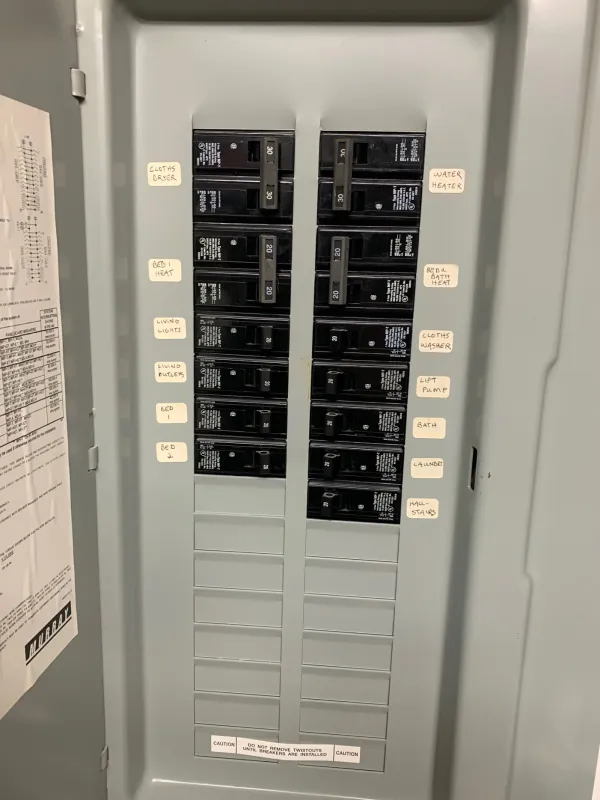
Good Panel – Plenty of space, well labeled, in good repair. Even if this panel were full of breakers, there is plenty of room for the installation of tandem breakers to consolidate the circuits and make more room. End result, homeowners should be able to move forward with a heat pump installation without significant added expenses.Content goes here ..
Water Heating & Other Appliances
Heat pump water heaters (HPWH) and heat pump clothes dryers are two examples of how the energy efficiency of heat pumps can make electricity-hungry home appliances efficient and easy on your wallet.
Heat Pump Water Heaters
Energy Star estimates that a family of 4 could save $3,750 with a heat pump water heater over the lifetime of the unit. HPWH’s efficiencies and cost savings depend greatly on where the unit is placed. Alaska Heat Smart continues to study these systems and their utilization. Please check back regularly for updated guidance. HPWHs will cool down their surrounding space, so careful consideration must be given to the potential for freezing pipes in some circumstances.
Learn more from Energy Star’s Heat Pump Water Heater page.
Heat Pump Clothes Dryers
Clothes dryer can use heat pumps to reduce energy by at least 30% compared to standard dryers, according to Energy Star. In addition, these dryers do not require ventilation, are easy to install, and are generally easier on clothes.
Learn more from Energy Star’s Heat Pump Clothes Dryer page.